Vinyl Panels – Durability and Comfort
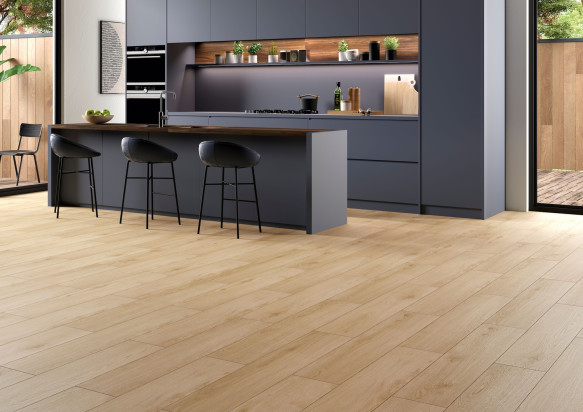
Vinyl panels have been present in our home interiors for many years. Made of polyvinyl chloride, they are often combined with other materials such as stone powder and polymers. They feature a multi-layer structure and 100% waterproof properties. SPC floors are resistant to mechanical damage, dents, and scratches — although daily use should always follow the manufacturer’s recommendations. Vinyl panels are among the most durable flooring materials available. Most products from reputable manufacturers come with long-term warranties, strong sales history, and the best ones are certified by the National Institute of Public Health (PZH). Available in a wide range of patterns and colors, they perfectly imitate natural wood grain, the beauty of stone, or the texture of concrete. Their attractive price — perfectly balanced with the quality offered — is another strong advantage. Vinyl flooring is an excellent alternative to wooden or real stone floors: much easier to install, clean, and they do not require periodic maintenance. Vinyl panels are also significantly more resistant to damage. Their advantages include compatibility with both hydronic underfloor heating and electric systems embedded in a screed. They suit every type of room and are also ideal for commercial spaces with high foot traffic: offices, hotels, etc.
SPC or LVT Vinyl Panels?
There are several types of vinyl flooring available on the market, but the most popular are those known as SPC — Solid Polymer Core — and LVT — Luxury Vinyl Tile. SPC panels are noticeably more rigid, and therefore more resistant to dents, offering long-lasting performance thanks to their density of approx. 2050 kg/m³. They are perfect for rooms exposed to water, temperature fluctuations, or intensive use. LVT floors represent a more flexible version of vinyl panels, ideal for spaces where comfort underfoot is the top priority — bedrooms, children's rooms, or living rooms. SPC panels, including the Aqua Profi and Aquatus SPC models, feature a rigid core of high-density limestone composite, making them resistant to deformation and dents. This type of flooring is also 100% waterproof, making it suitable for demanding interiors such as bathrooms, kitchens, hallways, and even basements. Other benefits include dimensional stability, meaning they are far less prone to shrinking or expanding due to temperature and moisture. The rigid core also simplifies installation, so even DIY beginners can successfully handle it themselves. Additional advantages include acoustic insulation, the possibility to install them permanently by gluing to the subfloor or as a floating floor (with a dedicated underlay), and highly realistic wood reproduction with deep grain texture or imitation of other materials. For many users, the “drawback” is the requirement for a perfectly prepared subfloor and high precision during installation.
SPC or LVT — Which Should You Choose?
Although both types belong to the same flooring group, they differ in ways that will ultimately determine our choice. Aside from the structural composition, the key difference is rigidity. Wherever a very durable floor is needed, SPC panels will be the better option. In terms of appearance, both types convincingly imitate natural materials, so choosing a color or texture is simply a matter of personal taste. User comfort also depends on individual preferences. The answer to the question of which panels to choose depends entirely on the room type, its purpose, and your design expectations. Both SPC and LVT vinyl floors are suitable for most interiors and nearly all decorative styles.