Why Do Floor Panels Separate? Understanding the Cause
Before reaching for tools, it is worth understanding why the problem occurred. Weninger laminate flooring panels are wood-based products that naturally “work,” meaning they react to changing indoor conditions such as temperature and humidity fluctuations between summer and winter. That is why it is so important to carefully follow the manufacturer’s recommendations and installation instructions. The most common cause of a lifting panel is insufficient expansion gaps. If the floor does not have enough room to “float” and expand near walls or other fixed elements, it may begin to rise over time, potentially damaging the locking system of individual boards and making reinstallation impossible. Changes in humidity are also a major factor. Air that is too dry during the heating season can cause the material to shrink, leading to gaps between the boards. Another issue that may contribute to flooring problems is an uneven or unstable subfloor. Even the highest-quality laminate panels from the De Lux collection with a thickness of 12 mm can become deformed if the screed underneath contains uneven areas that were not levelled before installation. Understanding the source of the problem allows us to take comprehensive action and eliminate the root cause of potential flooring issues during future use.
A Non-Invasive Way to Shift a Panel – The Trick with…
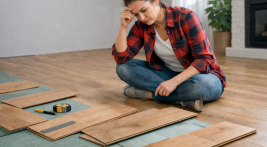
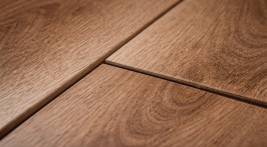
Wondering how to move a floor panel back into place? If the issue is simply a gap along the short edge of the panel, commonly referred to as floor separation, the safest and most effective method is to use a professional suction cup, for example one designed for glass, or a less specialised solution such as double-sided tape attached to a solid wooden block. A dedicated flooring installation kit may also be used. First, thoroughly clean the gap using a vacuum cleaner with a narrow nozzle attachment. Removing sand and dirt from between the panels is crucial, as debris trapped inside the locking mechanism may prevent the joint from closing properly. Next, prepare the panel by attaching a strong double-sided mounting tape to a hardwood block or by placing a vacuum suction cup on the panel you want to move. Using a rubber mallet, tap the attached block or suction cup firmly yet carefully, gradually moving the panel toward the gap. Thanks to the precision locking systems used in Weninger flooring, the panel should click neatly back into place. If the gap tends to reappear, you may apply a small drop of specialist D3-class adhesive for laminate flooring or wood into the joint before shifting the panel.
How to Repair a Raised Floor Panel?
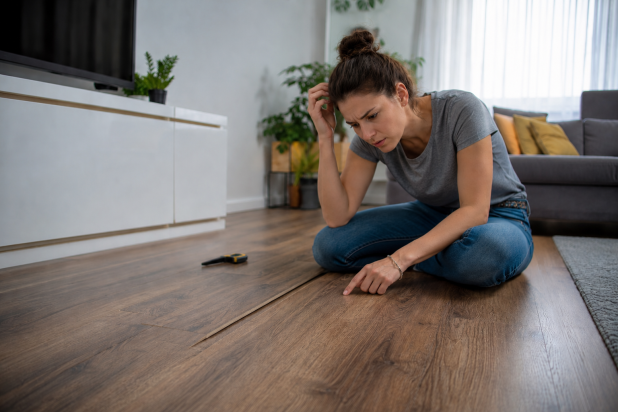
A raised or swollen floor panel along the edges is usually the result of water damage or excessive moisture. In the case of Weninger waterproof panels or models with increased water resistance from the Aquatus line, this problem occurs less frequently, but severe spills or flooding may still cause certain panels to swell or lift. If the water damage is recent, first dry the affected area thoroughly using towels and ensure proper ventilation in the room. Once the area is dry, place a heavy object on the panel for several dozen hours to apply local pressure — always using an absorbent material between the object and the floor surface. If the laminate remains deformed after a few days, replacing the damaged board may be necessary. A commonly used method involves cutting out the damaged element with a jigsaw — this type of replacement can be done independently, and more details can be found on our YouTube channel. The new board is then glued into place using laminate flooring adhesive. Always take care not to damage the underlay or underfloor heating system. Proper installation of laminate flooring is only part of the process. To avoid issues, it is worth choosing trusted products from reputable brands with decades of experience, such as Weninger, and selecting the highest-quality flooring available. To prevent future problems, remember to use the correct underlay and maintain optimal indoor humidity levels.