Before you start cleaning
Cleaning the floor should begin with thoroughly removing dust, small particles, and dirt from its surface by vacuuming carefully. This prevents scratching or damaging the top layer of the panels during cleaning. If possible, use an industrial vacuum cleaner that can suck up both fine dust and remnants of plaster, paint, or other post-renovation debris.
Dust may become airborne and then settle again, so floor cleaning should be the last step in post-renovation cleaning, following the rule: from top to bottom. First clean the walls and furniture, then vacuum and wash the floor.
What to use to clean floor panels after renovation?
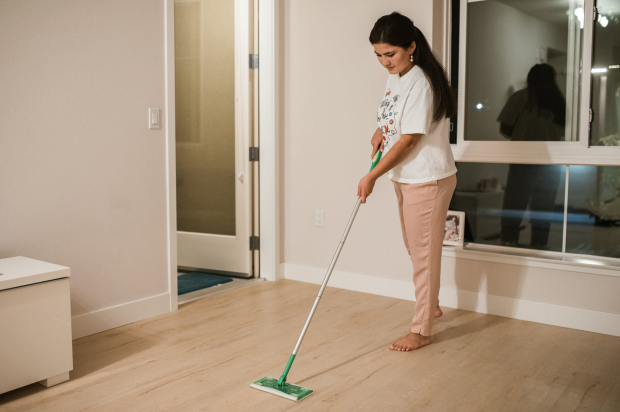
Do not use a string mop on heavily soiled floors, as it traps dust residues and can scratch the surface. Instead, use a flat or strip mop. The mop should be soaked in warm water with a dedicated laminate floor cleaner – avoid using: polishing agents, products containing wax or soap, and any containing solvents. The mop must be well wrung out to prevent excess water from soaking into and damaging the floor.
It is advisable to use specialized products designed for cleaning floor panels, which effectively remove dirt while being safe for the panels. A good example is the Weninger laminate floor cleaner and care liquid, which can be used not only after renovation but also daily.
Many people think that a steam mop might be a good alternative to traditional mops or cloths. However, this is mistaken; do not use such devices for cleaning or caring for wood-based floors (panels) or vinyl floors. These devices emit hot steam locally, which can damage floor panels. They are suitable for cleaning surfaces like glass or ceramics only.
Especially tough stains
Even after thorough cleaning, paint, plaster, glue, or cement residues may remain on the floor after renovation. How to deal with such stains?
The first method is scraping off spots that seem stuck to the panel surface. This is best avoided because mechanical removal can cause damage by scratching or even peeling the top laminate layer. If no other method is possible, use “blunt” plastic or wooden tools without sharp edges for scraping. Absolutely avoid metal scrapers, knives, screwdrivers, or kitchen scrubbers.
Depending on the type of stain, the appropriate solvent can be used – the most universal include alcohol, mineral spirits, or acetone. Be aware that solvents may discolor the floor’s top layer. Therefore, test the solvent on an inconspicuous spot first and apply only a small amount on a cotton cloth to remove stains. After cleaning, vacuum again and wash the floor with water to remove any residue.